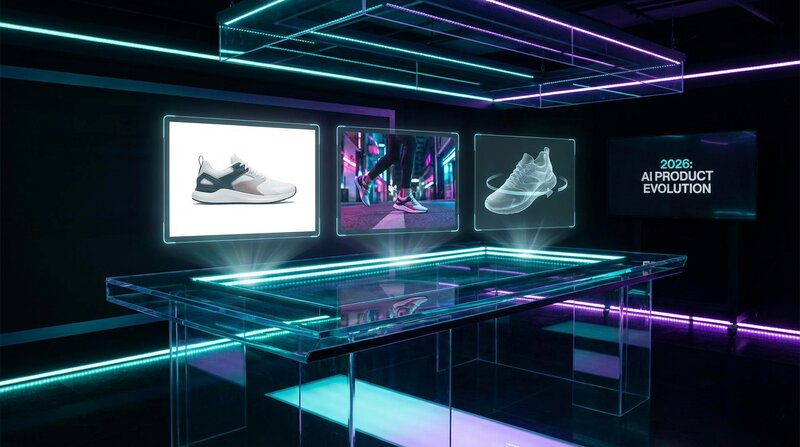
AI Product Photography in 2026: 10 Trends Reshaping E-Commerce Imagery
The AI product photography market is projected to reach $5 billion by 2035. Here are the 10 trends driving it in 2026.
The AI Photography Revolution Has Gone Mainstream
In 2024, AI product photography was an experiment. In 2025, early adopters proved it works. Now in 2026, it's the standard. Brands that haven't adopted AI-assisted imagery are actively losing market share to those that have.
The numbers back this up: stores implementing AI product photography saw an average conversion rate increase of 47-53% according to recent e-commerce reports. Over 34 million AI images are generated daily. The market grew from £450 million in 2024 and is projected to explode to £5 billion by 2035.
Here are the 10 trends defining AI product photography in 2026.
1. Batch Processing at Scale
The biggest shift in 2026 is volume. Sellers aren't generating one image at a time anymore - they're processing entire catalogues in a single session. Tools like ShopShot now offer batch upload where you queue up to 20 products, hit process, and get 10 professional variations per product automatically.
For a 50-product store, that's 500 professional images in under an hour. Traditional photography would take 2-3 weeks and cost thousands.
2. Brand Colour Consistency Across Every Image
Generic AI images are dead. The 2026 standard is branded AI imagery. Sellers now embed their brand colours directly into the generation process so every lifestyle shot, every background, every accent matches their visual identity.
ShopShot's brand colour feature lets you set your palette once and it persists across every session - ensuring your Shopify store, Amazon listings, and Instagram feed all look like they came from the same shoot.
3. 360-Degree Product Videos From a Single Photo
Static images are losing ground to interactive content. In 2026, AI can generate smooth 360-degree spin videos from a single product photo. These aren't choppy animations - they're 8-second cinematic spins powered by models like Google Veo that create genuinely convincing rotation effects.
Products with 360° views see engagement increases of 30% or more, and return rates drop because customers understand exactly what they're buying.
4. Style Presets and Mood-Based Generation
AI photography tools have moved beyond "white background" vs "lifestyle shot." The 2026 approach uses style presets - Minimalist, Luxury, Rustic, Scandinavian, Industrial, Tropical, Vintage - that transform your product's entire visual language with one click.
This means the same product can be instantly repositioned for different audiences. Your handmade candle gets a Rustic preset for Etsy and a Minimalist preset for your direct-to-consumer site.
5. AI-Powered Background Removal as a Standalone Tool
Background removal used to require Photoshop skills. In 2026, dedicated AI tools handle it in under 2 seconds with pixel-perfect accuracy. This is often the first step in any AI photography workflow: upload a messy phone photo, get a clean product cutout, then generate variations.
6. Customisable Shot Libraries
Rather than getting 10 random variations, sellers now control exactly which shot types they want. A typical selection might include: macro texture details for quality-conscious buyers, hero shots on white for marketplace compliance, lifestyle in-use images for social media, and flat-lay arrangements for Pinterest.
This level of customisation means every generated image has a specific purpose in your sales funnel.
7. Before-and-After Comparison Views
Product transformation is a powerful selling technique. AI now generates split-screen comparison images - raw vs styled, unboxed vs in-use - that tell a visual story. Combined with interactive comparison sliders on product pages, these images boost engagement significantly.
8. Multi-Platform Export Optimisation
One set of AI-generated images now gets automatically formatted for every platform: Amazon-compliant white backgrounds (RGB 255,255,255), Instagram 4:5 portrait crops, TikTok 9:16 vertical formats, and Pinterest-optimised aspect ratios - all from the same source generation.
9. AI Photography Marketplaces
A new category is emerging: marketplaces where photographers sell AI-enhanced product shots, templates, and presets. Sellers can browse and purchase pre-made visual assets, then customise them with their own products. This hybrid approach combines human creativity with AI efficiency.
10. Two-Tier Quality Models
The one-size-fits-all approach is dead. In 2026, AI photography tools offer tiered generation: a fast, affordable model for bulk catalogue work, and a premium model for hero images and marketing campaigns. ShopShot's Pro and Standard tiers reflect this - use Standard for volume, Pro for your best sellers.
What This Means for Sellers
The bottom line: AI product photography isn't a nice-to-have anymore. It's infrastructure. If your competitors are generating 10 professional variations per product in 25 seconds and you're still booking studio time, you're not competing on a level playing field.
Stay ahead of every trend. ShopShot includes batch processing, brand colours, 360° video, style presets, and customisable shot types - all in one platform. Try it free with 15 credits.
Frequently Asked Questions
What are the biggest AI product photography trends in 2026?
The top trends include batch processing at scale, brand colour consistency, 360-degree video from single photos, style presets, AI background removal, customisable shot libraries, before-and-after comparison views, multi-platform export, and two-tier quality models.
How much does AI product photography cost in 2026?
AI product photography costs between £10-80 per month for subscription plans, compared to £300-1,500+ for traditional photo shoots. Tools like ShopShot generate 10 professional variations per product in 25 seconds.
Is AI product photography replacing professional photographers?
Not entirely. AI excels at catalogue imagery, marketplace listings, and volume work. Professional photographers remain valuable for brand campaigns, on-model shoots, and complex luxury products. The smartest approach uses both strategically.
How big is the AI product photography market?
The AI product photography market grew from £450 million in 2024 and is projected to reach £5 billion by 2035. Over 34 million AI images are generated daily across all use cases.
Ready to Transform Your Product Photography?
Try ShopShot free and see professional AI photography in action.
Start Free - 15 Credits